Portfolio Assessment and Continuous Improvement

The SVP/COO portfolio uses assessment to strengthen the services and systems that support Temple’s mission. Across finance, human resources, safety, and operations, departments examine performance, identify opportunities for improvement, and use evidence to guide decisions.

The FY26 review brings together 67 completed assessments across 22 departments. These assessments examine how administrative and operational functions support teaching, research, the student and employee experience, and Temple’s relationship with its surrounding community.

The review documents measurable accomplishments alongside areas requiring further attention. Findings have informed changes in financial controls, student billing processes, employee services, safety practices, facilities management, and digital access. They also identify challenges involving service quality, infrastructure and staffing capacity.

Together, these findings provide a foundation for continuous improvement: understanding current performance, making informed changes, and evaluating whether those changes produce better results
assessment Process

How Our Assessment Process Works

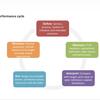
Each assessment connects a service, process, system, or initiative with evidence of its performance and an action informed by the findings.

Define the Purpose: Departments identify what they are evaluating, why it matters, and the intended outcome. Assessments may address recurring services, compliance responsibilities, financial performance, customer experience, or the implementation of a new system or process.

Measure Performance: Departments identify relevant measures and review available evidence. Depending on the assessment, this may include financial and operational data, inspections, surveys, utilization, compliance records, or project milestones. Established benchmarks and prior-year results provide points of comparison; newer initiatives may first require a baseline.

Interpret the Findings: Results are examined against expectations to identify strengths, gaps, and contributing factors. This includes considering changes in demand, staffing, resources, technology, and reporting periods so that findings can be understood in context.

Act on What We Learn: Departments use findings to refine procedures, improve communications, target training, strengthen controls, adjust service delivery, and inform resource priorities. The review distinguishes between actions already completed and improvements that remain planned or underway.

Reassess and Refine: Follow-up assessment examines whether changes are producing the intended improvement. Departments can adjust their approach, strengthen their measures, and identify where further action is needed.

Completing an activity is one measure of progress. Understanding its effect on service, cost, safety, accuracy, or user experience is the next step.

Connecting Assessment to  Forward with Purpose

The portfolio’s work supports Temple’s strategic priorities by strengthening the administrative services and physical environment on which the University depends.

Student Success

Campus access, dependable services, and usable facilities support the student experience. Parking and shuttle reviews help departments respond to how the campus is used.

Research in Action

Laboratory safety programs, facilities reliability, space information, and the Biology sustainability pilot help support the environment for research.

Place-based Impact

Public safety, emergency coordination, retail planning, and sustainability connect campus operations with the health and vitality of the surrounding community.

What We Are Learning

The FY26 assessments show progress in financial stewardship, technology adoption, and coordination across departments. They also identify benchmarks that were not met and services where capacity or performance needs attention.

Reporting both accomplishments and gaps helps departments focus their next steps. Assessment findings are being used to prioritize corrective actions, clarify service expectations, strengthen performance measures, and inform discussions about staffing and investment.

Building a More Consistent Performance Framework

FY26 provides a starting point for more consistent performance reporting across the portfolio. The next phase is to refine key performance indicators, confirm reliable baselines, and distinguish implementation milestones from the outcomes those changes are intended to produce.

This approach will help departments and portfolio leadership track progress over time, evaluate the effectiveness of improvement efforts, and connect operational decisions with Temple’s broader priorities.

Meet the Portfolio Assessment Team

Portfolio Assessment Committee

Assessment Chair: Moira Stoddart 

Department assessment reports submitted by: 

  • Conrad Muth, Bursar
  • Martin Droz, Project Delivery Group
  • Dan Astran, FIRM
  • Joe Monahan, Facilities Management
  • John Johnson, Service Operations
  • Denise Wilhelm, Public Safety
  • Joshua Nussbaum, Emergency Mgt
  • Greg Lupinski, EHRS
  • Rebecca Collins, Sustainability
  • Karen Sherlock, Parking Services
  • Veronica Aymer, Business Affairs
  • Jennifer Sablich, Risk Management
  • Tarah Morris, Purchasing 
  • Farrah Al-Mansoor, COO
  • Katie D'Angelo, COO
  • Moira Stoddart, COO
  • Eric Brunner, HR
  • Deirdre Culbreath-Walton, HR
  • Nancy Hinchcliff, HR
  • Karen Ward, HR
  • Heather Woods, HR